
Die Peitsche der Pampas (1935): Besetzung, Handlung & Streaming
1935 · Film · ★ 4
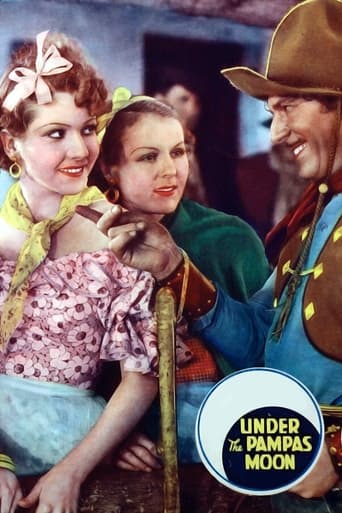
Released in 1935, Die Peitsche der Pampas is a western film directed by James Tinling, running about 78 minutes. “VELOZ and YOLANDA Introduce the new "COBRA TANGO"!” — that tagline sets the tone.
What it’s about. Cesare Campo is a hard-riding and hard-loving Argentine gaucho. Yvonne LaMarr is a famous Parisian singer on her way to play an engagement in a Buenos Aires cabaret. THe plane she is flying in is forced to land on the Pampas. Campo and his riders take the passengers to a hotel. Yvonne and Campo quickly fall in love, but she had to leave to make her singing engagement in Buenos Aires. Campo follows her and discovers that his horse that was the favorite to win the Big Race has been stolen.
Who’s in it. Die Peitsche der Pampas stars Warner Baxter as Cesar Campo, Ketti Gallian as Yvonne LaMarr, J. Carrol Naish as Tito and John Miljan as Graham Scott, among others.
How it landed. With an audience score of 4.0/10, Die Peitsche der Pampas has proved divisive with audiences.
Where to watch. Streaming options change often. See the full, country-by-country breakdown on our where to watch Die Peitsche der Pampas page.
If you liked it. Fans of Die Peitsche der Pampas tend to enjoy Zwei glorreiche Halunken, Django Unchained, Spiel mir das Lied vom Tod and Für ein paar Dollar mehr.
Häufige Fragen
- Where can I watch Die Peitsche der Pampas (1935)?
- Streaming, rental and purchase options for Die Peitsche der Pampas change frequently. Check our where-to-watch page for the latest availability in your country.
- Is Die Peitsche der Pampas worth watching?
- Die Peitsche der Pampas holds an audience score of 4.0 out of 10, and is a strong pick if you enjoy western. Reactions are mixed, so it may depend on taste.
- Who stars in Die Peitsche der Pampas?
- Die Peitsche der Pampas stars Warner Baxter, Ketti Gallian, J. Carrol Naish, John Miljan and Rita Hayworth.
- When was Die Peitsche der Pampas released?
- Die Peitsche der Pampas was released in 1935, with a runtime of about 78 minutes.