
Der var engang (1922): Besetzung, Handlung & Streaming
1922 · Film · ★ 5.5
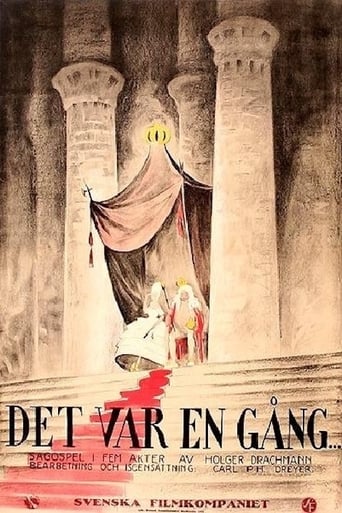
Released in 1922, Der var engang is a fantasy, drama and liebesfilm film directed by Carl Theodor Dreyer, running about 75 minutes.
What it’s about. The Princess of Illyria has spurned every suitor, when a gypsy loitering around the castle catches her eye. In actuality, he is the Prince of Denmark, there with his friend Kasper Røghat. The prince captivates her with magic devices, a noisemaker and a copper kettle, in return for kisses and a night in her bedchamber. When Kasper Røghat tells the king about the “affair,” the princess is thrown out of the castle, forcing her to settle in Denmark with the prince and work as a poor potter. Will the fairytale have a happy ending?
Who’s in it. Der var engang stars Clara Pontoppidan as The Princess of Illyria, Svend Methling as The Prince of Denmark, Peter Jerndorff as The King of Illyria and Torben Meyer as Master of ceremonies, among others.
How it landed. With an audience score of 5.5/10, Der var engang has drawn a solid, mixed-to-positive response.
Where to watch. Streaming options change often. See the full, country-by-country breakdown on our where to watch Der var engang page.
If you liked it. Fans of Der var engang tend to enjoy Der Herr der Ringe - Die Rückkehr des Königs, The Green Mile, Chihiros Reise ins Zauberland and Der Herr der Ringe - Die Gefährten.
Häufige Fragen
- Where can I watch Der var engang (1922)?
- Streaming, rental and purchase options for Der var engang change frequently. Check our where-to-watch page for the latest availability in your country.
- Is Der var engang worth watching?
- Der var engang holds an audience score of 5.5 out of 10, and is a strong pick if you enjoy fantasy, drama and liebesfilm. Reactions are mixed, so it may depend on taste.
- Who stars in Der var engang?
- Der var engang stars Clara Pontoppidan, Svend Methling, Peter Jerndorff, Torben Meyer and Hakon Ahnfelt-Rønne.
- When was Der var engang released?
- Der var engang was released in 1922, with a runtime of about 75 minutes.