Fishke der Krumer (1939): Besetzung, Handlung & Streaming
1939 · Film · ★ 5.7
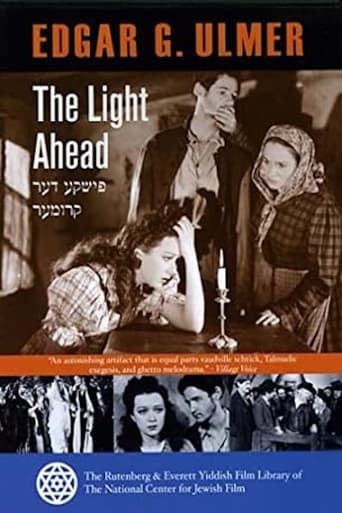
Released in 1939, Fishke der Krumer is a notable film directed by Edgar G. Ulmer, running about 94 minutes.
What it’s about. The Light Ahead is possibly the greatest of Edgar G. Ulmer’s shtetl films. Here, the director counterpoints his pastoral Green Fields to criticize the poverty and superstition that oppress a pair of star-crossed lovers. Made on the eve of World War II, The Light Ahead is at once romantic, expressionist, and painfully conscious of the danger about to engulf European Jews. Impoverished and disabled lovers Fishke and Hodel dream of life in the big city of Odessa, free from the poverty and stifling old-world prejudices of the shtetl. The benevolent and enlightened bookseller Mendele helps them, turning small-town superstitions to their advantage. Based on Mendele Mokher Seforim's story of love frustrated by small-town ignorance, this luminous allegory of escape marries Edgar Ulmer's masterful direction with superb acting by members of New York's Artef and Yiddish Art Theaters.
Who’s in it. Fishke der Krumer stars Helen Beverly as Hodele (the blind), David Opatoshu as Fishke (the lame) and Isidore Cashier as Mendele Moicher Sforim.
How it landed. With an audience score of 5.7/10, Fishke der Krumer has drawn a solid, mixed-to-positive response.
Where to watch. Streaming options change often. See the full, country-by-country breakdown on our where to watch Fishke der Krumer page.
Häufige Fragen
- Where can I watch Fishke der Krumer (1939)?
- Streaming, rental and purchase options for Fishke der Krumer change frequently. Check our where-to-watch page for the latest availability in your country.
- Is Fishke der Krumer worth watching?
- Fishke der Krumer holds an audience score of 5.7 out of 10. Reactions are mixed, so it may depend on taste.
- Who stars in Fishke der Krumer?
- Fishke der Krumer stars Helen Beverly, David Opatoshu and Isidore Cashier.
- When was Fishke der Krumer released?
- Fishke der Krumer was released in 1939, with a runtime of about 94 minutes.