Il viaggio a Reims - Barcelona (2017)
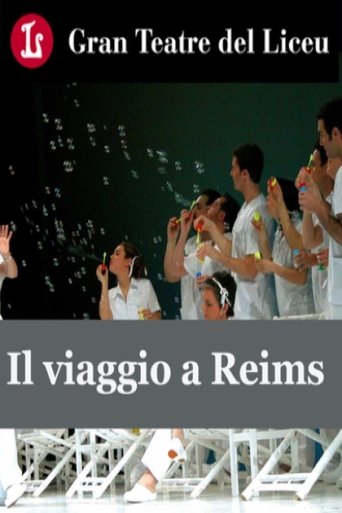
The Gran Teatre del Liceu’s 2017/2018 season opened with Rossini’s dramma giocoso Il viaggio a Reims, the “event piece” written exclusively for the coronation of France’s Charles X in Reims in 1825. Apart from the Rossini Opera Festival in Pesaro (one of the co-producers), this otherwise infrequently performed work has received a bright yet perhaps over-minimalist staging by Emilio Sagi. A fixed set portraying the sun deck and furnishings of a spa hotel (using only the stage front) provides the opera’s eclectic group of European aristocrats an unexpectedly informal aspect from the outset, replete with bathrobes, towels and slippers. This is novel, but confuses the audience as to who is who in the story. Not until the end of the second act, an hour and a half into the performance, does the cast change to more formal dining attire and the audience has a minimally clearer idea of the different nationalities (and idiosyncracies) portrayed.
Feature zu Il viaggio a Reims - Barcelona lesen →Hauptbesetzung
Vollständige Besetzung & Crew →
Movie DNA
Häufige Fragen zu Il viaggio a Reims - Barcelona
Worum geht es in Il viaggio a Reims - Barcelona?
The Gran Teatre del Liceu’s 2017/2018 season opened with Rossini’s dramma giocoso Il viaggio a Reims, the “event piece” written exclusively for the coronation of France’s Charles X in Reims in 1825. Apart from the Rossini Opera Festival in Pesaro (one of the co-producers), this otherwise infrequently performed work has received a bright yet perhaps over-minimalist staging by Emilio Sagi. A fixed set portraying the sun deck and furnishings of a spa hotel (using only the stage front) provides the opera’s eclectic group of European aristocrats an unexpectedly informal aspect from the outset, replete with bathrobes, towels and slippers. This is novel, but confuses the audience as to who is who in the story. Not until the end of the second act, an hour and a half into the performance, does the cast change to more formal dining attire and the audience has a minimally clearer idea of the different nationalities (and idiosyncracies) portrayed.