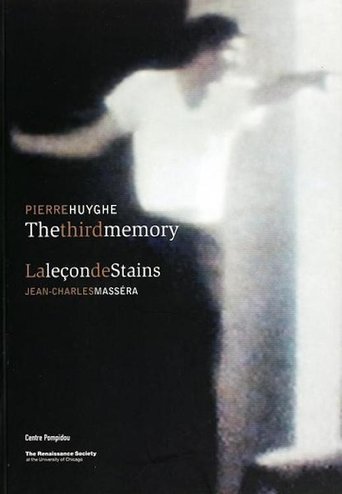
The Third Memory (1999)
4 Stimmen
Using time, memory, and the texture of everyday experience as his mediums, Pierre Huyghe conflates the traditional dichotomy between art and life. Working in an array of cultural formats—from billboards and television broadcasts to community celebrations and museum exhibitions—he reformulates their codes and deploys them as catalysts for creating new experiential possibilities. A mode of perception that lies in the interstices between reality and its representation is the subject of his two-channel video, The Third Memory (2000), which reenacts the 1972 hold-up of a Brooklyn bank immortalized in Sidney Lumet's acclaimed film Dog Day Afternoon (1975). Almost 30 years later, Huyghe provides a platform for the heist's charismatic mastermind, John Wojtowicz, to relate his version of that infamous day in a reconstructed set of the bank.
Feature zu The Third Memory lesen →Movie DNA
Häufige Fragen zu The Third Memory
Worum geht es in The Third Memory?
Using time, memory, and the texture of everyday experience as his mediums, Pierre Huyghe conflates the traditional dichotomy between art and life. Working in an array of cultural formats—from billboards and television broadcasts to community celebrations and museum exhibitions—he reformulates their codes and deploys them as catalysts for creating new experiential possibilities. A mode of perception that lies in the interstices between reality and its representation is the subject of his two-channel video, The Third Memory (2000), which reenacts the 1972 hold-up of a Brooklyn bank immortalized in Sidney Lumet's acclaimed film Dog Day Afternoon (1975). Almost 30 years later, Huyghe provides a platform for the heist's charismatic mastermind, John Wojtowicz, to relate his version of that infamous day in a reconstructed set of the bank.