Soliloquy (1999)
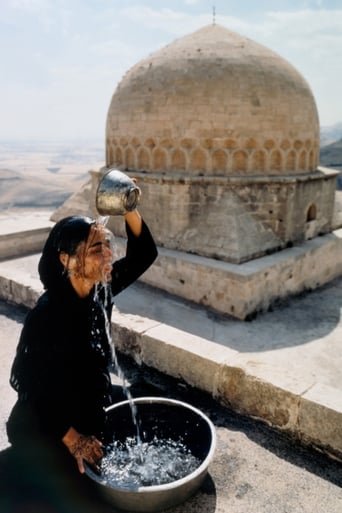
Two screens face each other in a dark room, only a bench off to the side interrupting the space between them. Settling into this interstitial expanse of Shirin Neshat’s Soliloquy (1999), viewers become mediators, with the series of scenes on each screen flowing not past, but through this audience – asking them, perhaps, to act as witnesses to the ensuing visual dialogue. The titles begin, in English and Persian; then, the sole character appears, clad in black robes and played by Neshat herself. She is looking out of two different windows: one in Albany, New York; the other in Mardin, Turkey, not far from the artist’s native Iran.
Feature zu Soliloquy lesen →Hauptbesetzung
Vollständige Besetzung & Crew →

Movie DNA
Häufige Fragen zu Soliloquy
Worum geht es in Soliloquy?
Two screens face each other in a dark room, only a bench off to the side interrupting the space between them. Settling into this interstitial expanse of Shirin Neshat’s Soliloquy (1999), viewers become mediators, with the series of scenes on each screen flowing not past, but through this audience – asking them, perhaps, to act as witnesses to the ensuing visual dialogue. The titles begin, in English and Persian; then, the sole character appears, clad in black robes and played by Neshat herself. She is looking out of two different windows: one in Albany, New York; the other in Mardin, Turkey, not far from the artist’s native Iran.