Utószezon (1967): reparto, argumento y streaming
1967 · Película · ★ 6.5
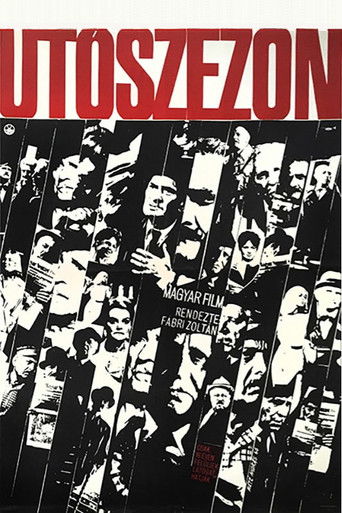
Released in 1967, Utószezon is a comedia and drama film directed by Zoltán Fábri, running about 119 minutes.
What it’s about. Kerekes (Antal Pager) believes he is wanted by the police when his friends play a practical joke in this unusual comedy drama. He returns to his hometown where he was accused of turning a Jewish druggist and the druggist's wife over to the Nazis. With his friends following him, Kerekes tries to find out what became of the couple after they were deported. After being subjected to a mock trial by his friends -- and found guilty -- Kerekes becomes despondent and attempts to kill himself. Flashbacks and hallucinations are employed to tell this story that occurs during the Eichmann trial. Both the film and Antal Pager gained some unwanted publicity when a Variety article from April 23rd, 1967 accused Pager of being a Nazi collaborator for his role in an anti-Semitic film during World War II.
Who’s in it. Utószezon stars Noémi Apor as A vörös nő, Samu Balázs as Dezső, Lajos Básti as Holl Péter and Gyula Benkő, among others.
How it landed. With an audience score of 6.5/10, Utószezon has drawn a solid, mixed-to-positive response.
Where to watch. Streaming options change often. See the full, country-by-country breakdown on our where to watch Utószezon page.
If you liked it. Fans of Utószezon tend to enjoy Forrest Gump, Parásitos, La vida es bella and El club de la lucha.
Preguntas frecuentes
- Where can I watch Utószezon (1967)?
- Streaming, rental and purchase options for Utószezon change frequently. Check our where-to-watch page for the latest availability in your country.
- Is Utószezon worth watching?
- Utószezon holds an audience score of 6.5 out of 10, and is a strong pick if you enjoy comedia and drama. Reactions are mixed, so it may depend on taste.
- Who stars in Utószezon?
- Utószezon stars Noémi Apor, Samu Balázs, Lajos Básti, Gyula Benkő and Gyula Kamarás.
- When was Utószezon released?
- Utószezon was released in 1967, with a runtime of about 119 minutes.