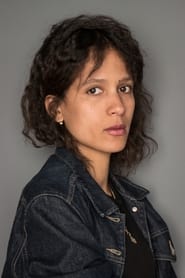
Clarisse Hahn
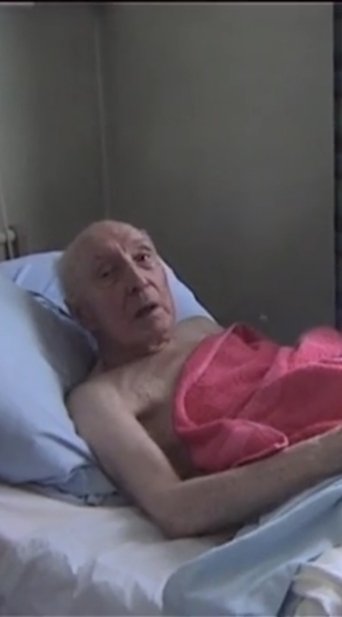
Focusing on the body, Clarisse Hahn’s work adopts its way of taking a frontal approach to the presence and constitution of others with tremendous healthy, lustful rawness. In keeping with Clarisse’s style, the "Boyzone" series (started in 1998 and still ongoing) picks out from the buzz of the world a few gestures, a few movements by ordinary male figures captured in their normal activities: soldiers, young lads, workers, sportsmen, a dog handler… With her primary forms of description free of any narrative element, Clarisse Hahn locates her work in the original tradition of the analytical series that run from Étienne-Jules Marey to Phill Niblock or Harun Farocki. Confronting the intensity of the body as flesh, as meat, as phantasm, in the organicness accommodated by rituals and social constructs but which ultimately resists all symbolization, without judging or even describing anything, Clarisse Hahn’s films lash the palpitation of life in the raw. Each of them overexposes a somatic state that is simultaneously biologically ordinary and socially extreme. In 1999, "Hôpital" (Hospital) explores illness and death; in 2000 and 2003, the diptych formed by "Ovidie" and "Karima" is devoted to sexual practices and displaying them; in 2005, "Les Protestants" (The Protestants) serves to complement that work in the concomitant field of the practices of modesty and decency. In the descriptive frankness, all normativeness disappears, therefore all deviancy does too; the only things left are singularities, individualized or dealt with in clusters. From 2009, this great documentary force began to serve the Kurdish cause, and popular struggles more generally: firstly with the intimate "Kurdish Lover" (2010), then with the trilogy "Notre Corps est une arme" (Our Body Is A Weapon, 2011), shown both as an installation and a traditional projection. Clarisse Hahn is empowered by a political consciousness, gained by diving headlong into the world and carrying out positive research into the shades of meaning produced by the violence of the indisputable appearance of others, as she tackles the watershed of fiction. First of all with "Queridos Amigos" (Dear Friends, 2013), where the counterpoint of documentary images and letters written by Thomas Clerc produces novel narrative effects, tempered with melancholy, in this body of work previously fiercely dedicated to the immediacy of presence; then with the lengthy preparation of a fiction film devoted to the past of Kurdish resistance, a past that has no images and hence requires the working out of proper forms of representation, in the political, elective meaning of that word. (Nicole Brenez - Politiques de la présence, June 2018)
Known for
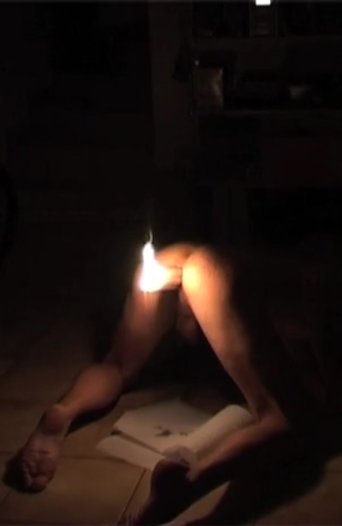 Momento
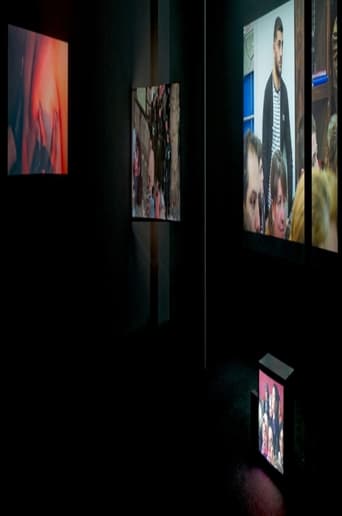 Momento
 Momento
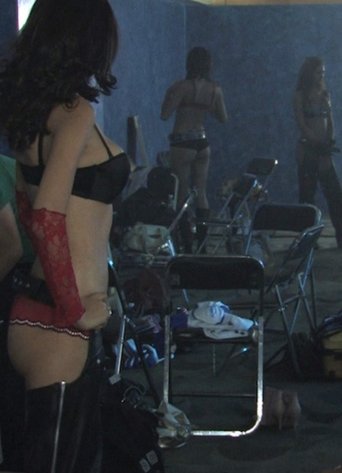 Momento
 Momento
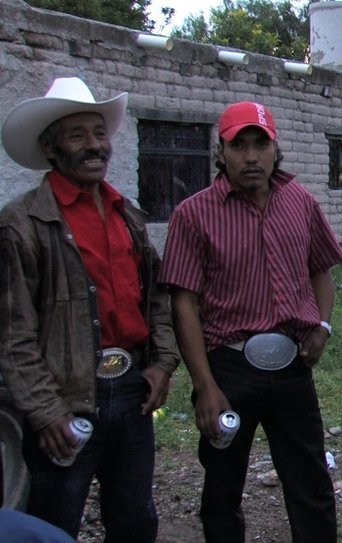 Momento
 Momento
 Momento
 Momento
 Momento
 Momento
 Momento
 Momento
 Momento