White Heart (1975)
5 votes
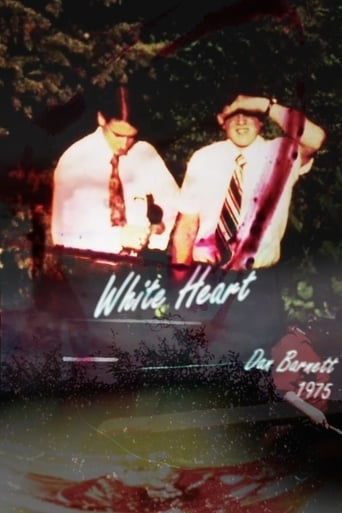
Legendary among filmmakers who have witnessed it, White Heart is a symphonic exploration of cinematic meaning that unfolds through a multi-layered, contrapuntal audio-visual montage of numerous and disparate ingredients: images of city streets, verdant forests, and ocean waves; bits of film leader and editor’s marks; oblique footage of Barnett’s colleagues Larry Gottheim and Saul Levine; an interview with two young missionaries; the sounds of classical music, typewriters, video tone, and, most centrally, a brief passage from Ludwig Wittgenstein’s Philosophical Investigations. These elements and more emerge and re-emerge like musical motifs, continuously and meticulously altered through processes like bleaching, staining, and multiple print generation, dramatically extracting the formal particularities of the Kodachrome reversal print.
Leer el reportaje de White Heart →Movie DNA
Frequently asked questions about White Heart
What is White Heart about?
Legendary among filmmakers who have witnessed it, White Heart is a symphonic exploration of cinematic meaning that unfolds through a multi-layered, contrapuntal audio-visual montage of numerous and disparate ingredients: images of city streets, verdant forests, and ocean waves; bits of film leader and editor’s marks; oblique footage of Barnett’s colleagues Larry Gottheim and Saul Levine; an interview with two young missionaries; the sounds of classical music, typewriters, video tone, and, most centrally, a brief passage from Ludwig Wittgenstein’s Philosophical Investigations. These elements and more emerge and re-emerge like musical motifs, continuously and meticulously altered through processes like bleaching, staining, and multiple print generation, dramatically extracting the formal particularities of the Kodachrome reversal print.
How long is White Heart?
White Heart has a runtime of 53 minutes.