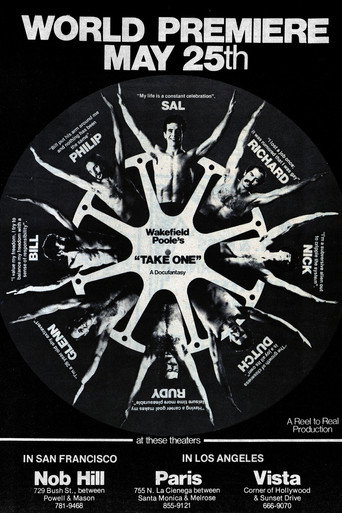
Take One (1977)
After leaving New York for San Francisco, acclaimed filmmaker and artist Wakefield Poole (Bijou, Boys In The Sand) set out to create a unique cinematic vision of male sexuality, combining documentary, performance art, and cinema verite filmmaking techniques, which resulted in one of the most distinctive works of all-male cinema of the 1970s: TAKE ONE. In it, Poole explores the fantasies of a group of men, having them articulate their desires to the camera, then allowing them to live them out in elegant, abstract, and experimental scenes unlike any others in his diverse filmography. Using only friends and acquaintances as subjects, Poole creates a film that is as introspective to sexual desire as it is erotic.
Leer el reportaje de Take One →Reparto principal
Reparto y equipo completo →

Movie DNA
Frequently asked questions about Take One
What is Take One about?
After leaving New York for San Francisco, acclaimed filmmaker and artist Wakefield Poole (Bijou, Boys In The Sand) set out to create a unique cinematic vision of male sexuality, combining documentary, performance art, and cinema verite filmmaking techniques, which resulted in one of the most distinctive works of all-male cinema of the 1970s: TAKE ONE. In it, Poole explores the fantasies of a group of men, having them articulate their desires to the camera, then allowing them to live them out in elegant, abstract, and experimental scenes unlike any others in his diverse filmography. Using only friends and acquaintances as subjects, Poole creates a film that is as introspective to sexual desire as it is erotic.