Падение Берлина (1950) : distribution, intrigue et streaming
1950 · Film · ★ 6.1
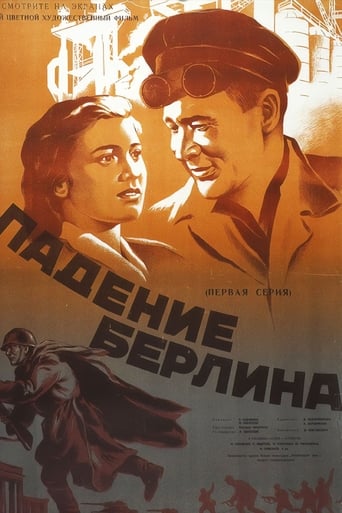
Released in 1950, Падение Берлина is a drame and guerre film directed by Mikhail Tchiaoureli, running about 167 minutes.
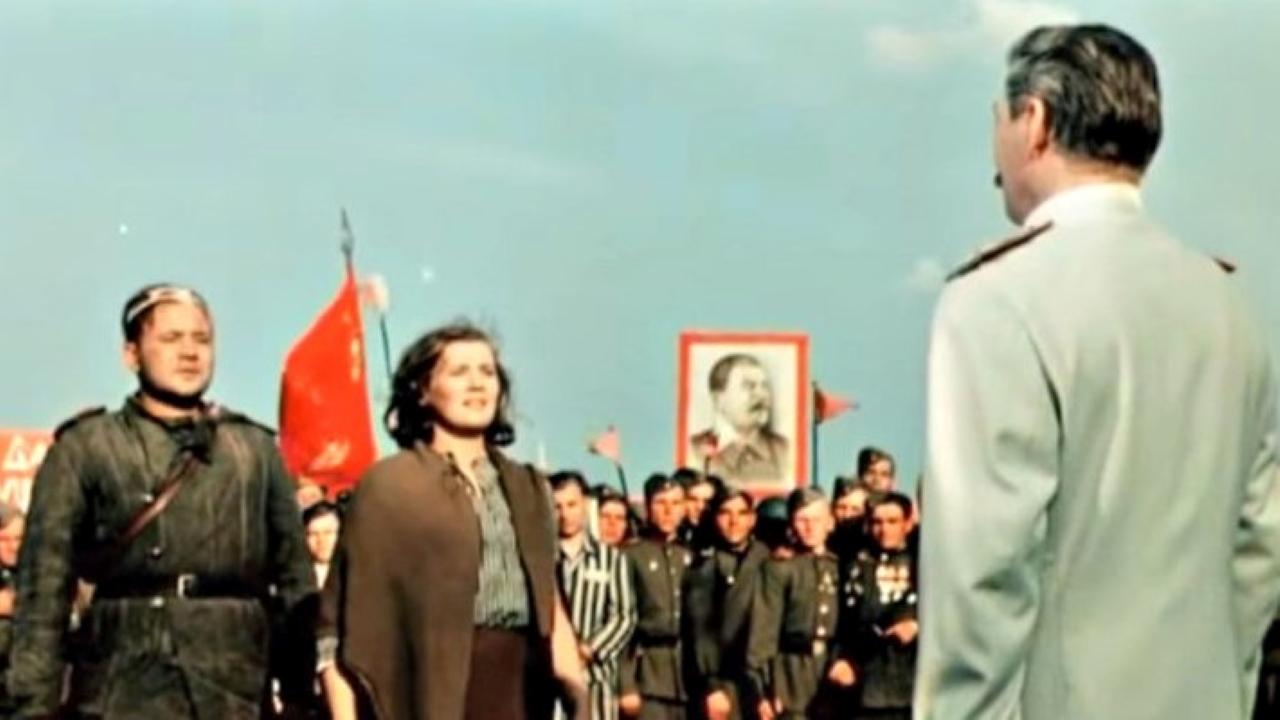
What it’s about. Surrounded by a few party officials, Alexei Ivanov, a stakhanovist smelter, is decorated by Stalin. The "Little Father of the Peoples" takes this opportunity to invoke threats of war.... One day, war indeed breaks out. Bombs fall on the field where Alexei finds himself in the company of the schoolmistress Natacha, his fiancée. Alexei joins the Red Army and soon becomes a sergeant. Fighting rages and German troops advance. Natacha is arrested and deported. But the tide turns decisively with the German defeat at Stalingrad. Now the major offensive against Hitler can begin.
Who’s in it. Падение Берлина stars Mikheil Gelovani as Marshal Iosef Visarionovic Stalin, Aleksei Gribov as Party official, Maksim Shtraukh as Party official and Nikolai Bogolyubov as Factory Superintendent Kumchinsky, among others.
How it landed. With an audience score of 6.1/10, Падение Берлина has drawn a solid, mixed-to-positive response.
Where to watch. Streaming options change often. See the full, country-by-country breakdown on our where to watch Падение Берлина page.
If you liked it. Fans of Падение Берлина tend to enjoy Les Évadés, Le Parrain, La Liste de Schindler and Le Parrain, 2e partie.
Questions fréquentes
- Where can I watch Падение Берлина (1950)?
- Streaming, rental and purchase options for Падение Берлина change frequently. Check our where-to-watch page for the latest availability in your country.
- Is Падение Берлина worth watching?
- Падение Берлина holds an audience score of 6.1 out of 10, and is a strong pick if you enjoy drame and guerre. Reactions are mixed, so it may depend on taste.
- Who stars in Падение Берлина?
- Падение Берлина stars Mikheil Gelovani, Aleksei Gribov, Maksim Shtraukh, Nikolai Bogolyubov and Sofiya Giatsintova.
- When was Падение Берлина released?
- Падение Берлина was released in 1950, with a runtime of about 167 minutes.