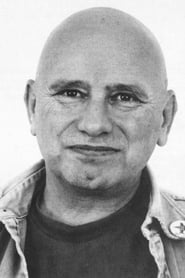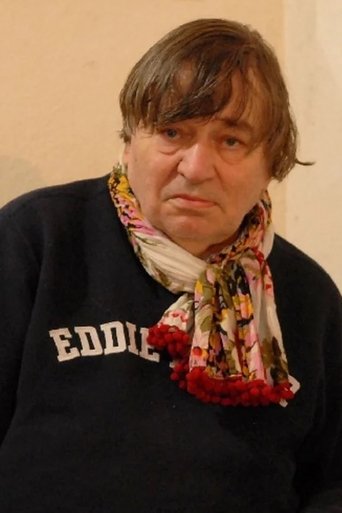
Ludwig Schönherr
Ludwig Schönherr began making photographs and paintings in the late ‘50s. In the mid-‘60s, his interest in the visual arts shifted to film. From 1967-1970, a period of intense productivity in European experimental film more generally, Schönherr made scores of short super 8 and 16mm films that explored specific technical, aesthetic, and representational aspects of the medium, namely, the zoom, the use of flickering color, and the depiction of the face. At approximately the same time, Schönherr acquired his first black and white television and produced a lengthy series of “electronic films” or single-frame films of television images, interrupted by flickering color. This beautiful and ever watchable series marked the start of the artist’s lifelong focus on the ubiquity of television and popular cultural images in modern life. Schönherr has also produced numerous single and multi-frame photographs of television images. Of his preoccupation with television, Schönherr quipped, “Life in television is much more interesting than real life outside.” In the mid- to late ‘70s, over the course of a number of visits to New York, Schönherr produced an astounding 107 hour, super 8 mm film, a “visual diary” that consists of impressions of the city, its inhabitants, and its television culture. In the mid-80s, Schönherr made a similarly stunning portrait film of the city of Hamburg. The sixty minute film, “Unknown Hamburg” (1983-8)–the artist’s only work produced with public funds–intersperses carefully framed shots of unfamiliar Hamburg cityscapes with silent, close-ups of ballerinas from the Hamburg Ballet, images reminiscent of Andy Warhol’s “Screen Tests”. Alongside television and urban landscapes, ballerinas surface again and again as the objects of Schönherr’s gaze, both in his films and photographs. (In the mid-‘60s Schönherr even wrote two ballets himself). The artist’s diverse production has been accompanied by the development of ever changing, concisely articulated theories about film, television and photography. Most of these one to two page theories address questions about the formal structures governing the organization of images in the respective media. Schönherr’s interest in form and structure in both practice and theory avoids the dry academicism and self-important humorlessness that characterizes the thinking of many of his contemporaries in the realm of formal or structural film. In addition to pursuing his own projects, Schönherr frequently became involved with the work of other artists and friends, filming actions by Otto Mühl, photographing performances by Nam June Paik and by the seminal American underground artist Jack Smith, and contributing a film to Dieter Roth’s 1979 “The Hamburg Ballet.” That Schönherr has never presented his work publicly is due as much to the artist’s own humility and idiosyncrasy as to the fact that the work defies easy categorization. Neither stridently structural, nor purely pop, Schönherr has forged his own path between Fluxus and formal film.
Known for
 Viewing moment
 Viewing moment
 Viewing moment
 Viewing moment
 Viewing moment
 Viewing moment
 Viewing moment
 Viewing moment
 Viewing moment
 Viewing moment
 Viewing moment