The Sword and the Flute (1959)
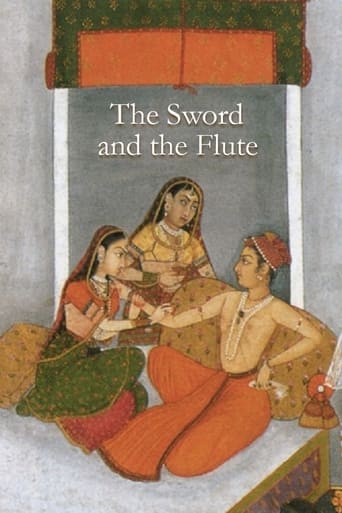
Visual images consist entirely of Indian miniature paintings, while an off-screen narrator traces the rise of this art form within the courts of Akbar (1542-1605), who united what is now India and Pakistan, and his son Jahangir (1569-1627). Two schools of the miniature paintings, done by anonymous artists, flourished after Akbar established unity and peace across what had been many smaller states: the Moghul (Islamic) school and the Rajput (Hindu) school. The Moghul paintings record the events of the court, while the Rajput school connects physical beauty and, in particular, the longing of women to the transcendent values of the spirit.
Read the The Sword and the Flute feature →Media
Top billed cast
Full cast & crew →
Movie DNA
More like this
More Documentary → Viewing moment
 Viewing moment
 Viewing moment
 Viewing moment
 Viewing moment
 Viewing moment
 Viewing moment
 Viewing moment
 Viewing moment
 Viewing moment
 Viewing moment
 Viewing moment
Frequently asked questions about The Sword and the Flute
What is The Sword and the Flute about?
Visual images consist entirely of Indian miniature paintings, while an off-screen narrator traces the rise of this art form within the courts of Akbar (1542-1605), who united what is now India and Pakistan, and his son Jahangir (1569-1627). Two schools of the miniature paintings, done by anonymous artists, flourished after Akbar established unity and peace across what had been many smaller states: the Moghul (Islamic) school and the Rajput (Hindu) school. The Moghul paintings record the events of the court, while the Rajput school connects physical beauty and, in particular, the longing of women to the transcendent values of the spirit.
How long is The Sword and the Flute?
The Sword and the Flute has a runtime of 24 minutes.