Study No. 6 (1930)
Original title: Studie Nr. 6
14 votes
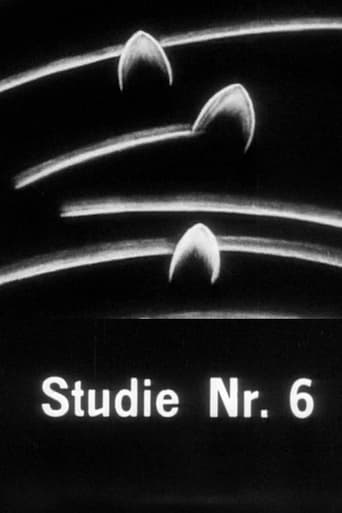
The first Studies were synchronized with records (Fischinger made a total of 13 Studies all without sound). It was only with the introduction of sound, beginning with Study No 6 that the films did full justice to this musical principle. The play of the white lines, the arcs, and the upside-down U’s running hither and thither like ballet dancers was brought into perfect synchronization with the music, and thus the films offered an abstract illustration of the melodies. Study No 6 is certainly the best of his films in terms of forms. - Hans Scheugl and Ernst Schmidt, Jr. Preserved by the Academy Film Archive in 2001.
Read the Study No. 6 feature →Movie DNA
More like this
More Animation → Viewing moment
 Viewing moment
 Viewing moment
 Viewing moment
 Viewing moment
 Viewing moment
 Viewing moment
 Viewing moment
 Viewing moment
 Viewing moment
 Viewing moment
 Viewing moment
Frequently asked questions about Study No. 6
What is Study No. 6 about?
The first Studies were synchronized with records (Fischinger made a total of 13 Studies all without sound). It was only with the introduction of sound, beginning with Study No 6 that the films did full justice to this musical principle. The play of the white lines, the arcs, and the upside-down U’s running hither and thither like ballet dancers was brought into perfect synchronization with the music, and thus the films offered an abstract illustration of the melodies. Study No 6 is certainly the best of his films in terms of forms. - Hans Scheugl and Ernst Schmidt, Jr. Preserved by the Academy Film Archive in 2001.
How long is Study No. 6?
Study No. 6 has a runtime of 2 minutes.